Only 4 Workers Comp Visits Without Approval? Make Them Count
Quick Answer
From 1 October 2026, the number of allied health consultations you can have without insurer pre-approval on a NSW workers compensation claim dropped from 8 to 4. Your first sessions now carry more weight. Go in with clear goals, track your progress, and talk early with your doctor and case manager about what comes next. This guide explains how to handle workers compensation allied health visits NSW rules, with support in Bankstown and Sydney.
Introduction
You have an open workers compensation claim and a referral for physio or exercise physiology. Then you hear the number of visits has changed. Now you’re wondering how far four sessions will go.
It’s a fair worry. Many injured workers in Bankstown, Chullora and nearby industrial areas are asking the same thing, and so are their employers and case managers.
The good news is that four sessions can be used well. A little preparation, clear goals and good records make a real difference. This article covers what changed, how to prepare, and what to ask about further approval.
Table of Contents
- Why This Matters
- What the Change to Workers Compensation Allied Health Visits NSW Means
- How to Prepare for Your First Sessions
- What to Ask Your Doctor and Case Manager
- How an Exercise Physiologist Supports Further Treatment Requests
- Quick Comparison Table
- Expert Insight
- Frequently Asked Questions
- Next Steps
Why This Matters
- Fewer sessions before approval is needed. With 4 visits instead of 8, there is less time to build momentum before the insurer is involved.
- Delays can interrupt progress. If you reach the limit without a plan, there may be a gap in treatment while approval is sorted out.
- Clear evidence helps everyone. Measurable results give your doctor and case manager something concrete to work with on a WorkCover and CTP claim.
- Employers benefit from clarity. Predictable treatment plans make return-to-work planning easier to coordinate.
- Active care keeps you in control. Knowing your exercises and goals means you can keep progressing between sessions.
What the Change to Workers Compensation Allied Health Visits NSW Means
The change took effect on 1 October 2026. SIRA (the State Insurance Regulatory Authority) lists it on its health provider information. This article is general information, not advice on your specific claim.
In plain language
Before, you could attend up to 8 allied health consultations without the insurer approving them first. Now that number is 4. Allied health includes physiotherapy and exercise physiology.
What it does not mean
- It does not mean treatment stops after 4 sessions.
- It does not mean further treatment is automatic. Extra sessions need approval from the insurer.
- It does not change the fact that your treating doctor remains central to your care.
How the rules apply to your claim can depend on your circumstances. Your insurer or case manager can confirm the details.
How to Prepare for Your First Sessions
Think of the first four sessions as a short project. You want a clear starting point, a plan and early signs of progress.
Before your first visit
- Gather your paperwork. Bring your claim details, referral and any medical certificates or imaging.
- Write down your work tasks. Lifting, reaching, standing, driving, repetitive movements. These shape your goals.
- List your main limits. Note what you can’t do now that you could before, such as carrying a toolbox or sleeping through the night.
- Note your current duties. Are you on modified duties, reduced hours or off work?
A simple four-session plan
- Session 1: Assess. Record your baseline, including pain, movement, strength and daily function, and agree on goals.
- Session 2: Start. Begin a safe, graded exercise program (gradually increasing the load) and learn your home exercises.
- Session 3: Build. Adjust the program based on how you responded and re-check key measures.
- Session 4: Review. Compare results with your baseline and decide whether further treatment is needed.
Do your home exercises between visits. Progress usually depends on what happens outside the sessions as well as in them.
What to Ask Your Doctor and Case Manager
Raise the topic early. Don’t wait until session four.
Questions for your treating doctor
- Do you support ongoing exercise-based treatment for my injury?
- What should my capacity and work goals look like over the next few weeks?
- Can you review my progress report when it’s ready?
Questions for your case manager
- How many of my allied health sessions have been counted so far?
- What information do you need to consider a request for more treatment?
- How long does approval usually take, and who sends the request?
- Who do I contact if I have a question mid-treatment?
Writing down the answers helps. It also gives your provider a clear idea of timing, so your sessions can be planned around it.
How an Exercise Physiologist Supports Further Treatment Requests
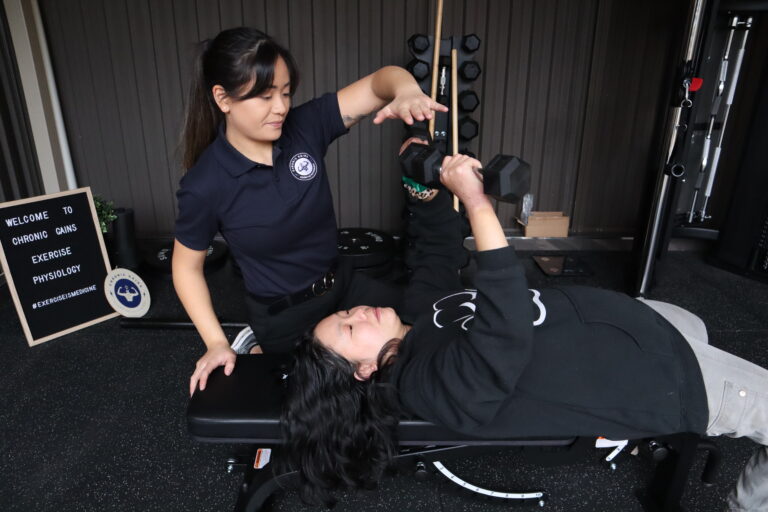
An accredited exercise physiologist (EP) uses exercise to help you restore function after injury. Our exercise physiology for injury rehabilitation is built around goals you can measure.
Measurable goals
“Feel better” is hard to track. A goal like “lift a 10 kg box to waist height for five repetitions” is not. Goals are tied to your job and daily life, and we check them at set points.
Progress notes that tell a clear story
Good notes record where you started, what was done, how you responded and what is still limiting you. They can then be shared with your doctor and case manager where appropriate. That gives decision-makers clear information when considering a request.
Honest recommendations
If you’ve met your goals, the plan may shift to independent exercise. If you’re still working toward them, notes can explain why more support may help. Either way, the recommendation reflects your results, and approval is always the insurer’s decision.
For longer-standing problems, our chronic injuries treatment page explains how we approach them.
Quick Comparison Table
| Area | Unclear approach | Measurable approach |
|---|---|---|
| Goals | “Get back to normal” | “Carry 15 kg for 20 metres” or “stand for 30 minutes” |
| Baseline | Described in general terms | Recorded movement, strength and function measures |
| Progress notes | “Doing okay” | Results compared with baseline at each review |
| Home program | Occasional exercise | Written plan, tracked each week |
| Further treatment | Raised at the last session | Discussed early with your doctor and case manager |
Expert Insight
Pro Tip: Treat session one as your most important one. When we record a clear baseline and agree on work-focused goals from day one, every later session has a purpose. It also means your progress, or lack of it, is easy to explain to your doctor and case manager.
Frequently Asked Questions
What happens after my 4 sessions are used?
Further allied health treatment needs insurer approval. Ask your case manager what they need and who submits the request. Your treating doctor and provider can often help with supporting information.
Does this change affect all my treatment?
The change is about the number of allied health consultations available without pre-approval. Your doctor’s care and other parts of your claim are separate. Check with your insurer about how it applies to your situation.
Can my employer see my progress notes?
Not automatically. Information is generally shared with your consent or where the claim process requires it. Ask your provider how they handle reporting, so you know what is shared and with whom.
Do I need a referral for exercise physiology on a workers compensation claim?
Usually, your treating doctor is involved in your treatment plan, and the insurer may have its own requirements. Check with your doctor and case manager before you start. If you have other conditions, Medicare or private health options may apply separately, such as chronic condition management (Medicare CDM).
Next Steps
Four sessions go further with a plan: gather your information, set measurable goals, track results and talk to your doctor and case manager early about what comes next. If you’re in Bankstown or the wider Sydney area and want support structuring your sessions, we can help you start with a clear baseline. Book an assessment.
Author Bio
Chronic Gains is an Exercise Physiology practice located inside Plus Fitness Bankstown, Sydney. We provide evidence-based exercise rehabilitation for musculoskeletal injuries and chronic health conditions, and support clients funded through NDIS, Workers Compensation, CTP, Medicare and private health across NSW.
This article is general information only and is not a substitute for individual advice. Speak with your GP or treating health professional about your situation.